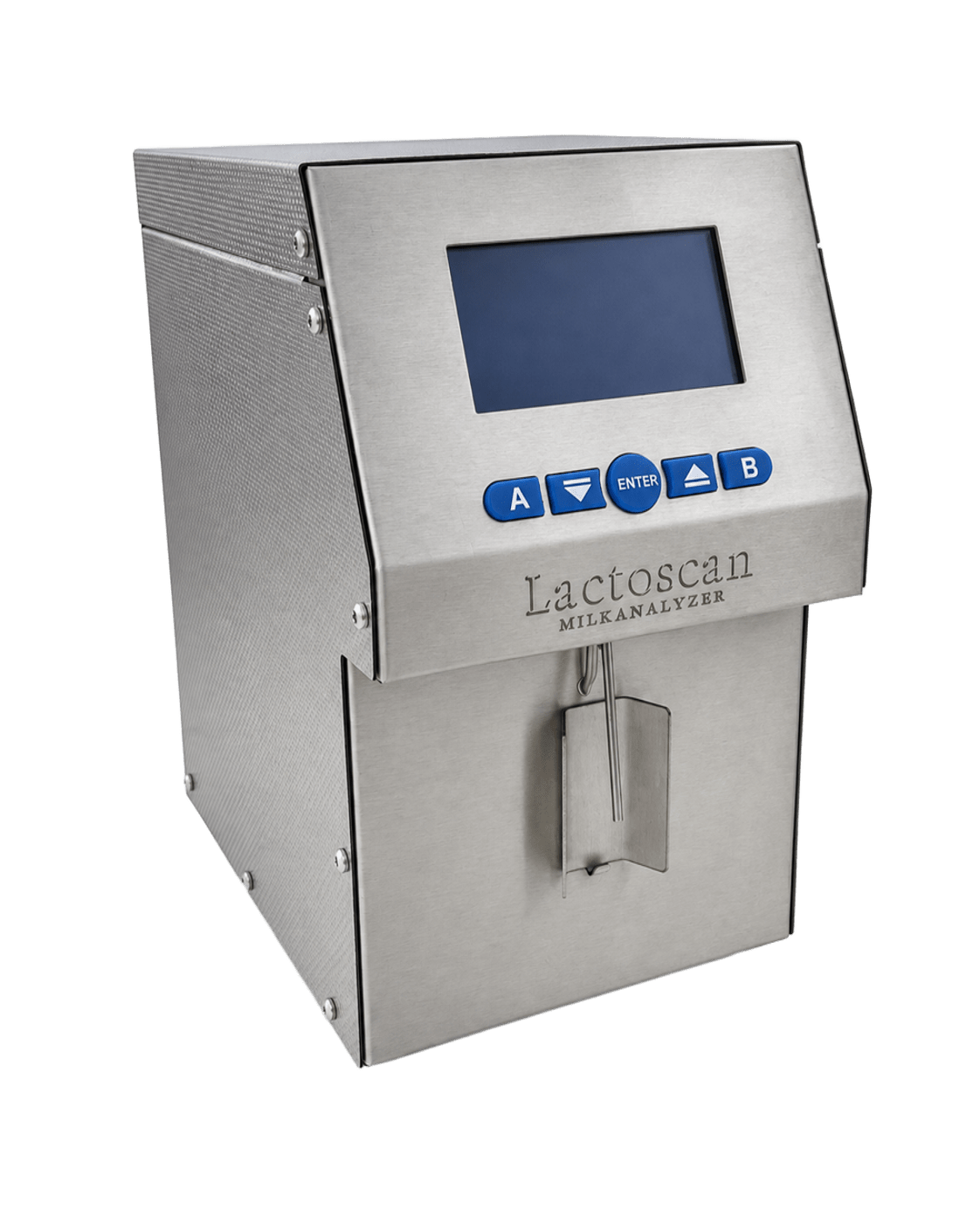
What Is a Milk Analyzer Machine?
A milk analyzer is an electronic milk testing machine that measures the composition of a small milk sample and shows the results on a digital display. It is also commonly described as a milk fat testing machine, milk analyser or milk fat SNF testing machine.
In dairy collection, the most important routine numbers are usually FAT, SNF and density. Depending on the model, the analyzer may also report protein, lactose, added water, salts or minerals and other parameters. For a collection centre, the value is simple: test the sample quickly, record the reading and use the result for quality control or payment calculation.
What Parameters Does a Milk Analyzer Measure?
Modern analyzers can combine several measurements in one test. Common outputs include FAT (%), SNF (%), density, protein, lactose, added water, freezing point, salts or minerals and sample temperature. Advanced models may also provide pH or conductivity.
The exact parameter range depends on the model, calibration and intended application. For example, the KTPLBOND-701 is an ultrasonic milk analyzer and collection system that combines milk testing, weighing, data storage and instant thermal printing.
How Does an Ultrasonic Milk Analyzer Work?
Most milk analyzers used for routine Indian dairy collection are based on ultrasonic measurement. The instrument sends sound waves through the milk sample and measures how the signal behaves. Changes in sound velocity, attenuation and related acoustic properties are influenced by the milk composition, allowing the instrument to calculate values such as FAT, SNF and density after calibration.
In a typical workflow, a small sample is drawn into the analyzer, the sample is brought into the required measuring condition, the ultrasonic measurement is taken, the processor applies its calibration and the final values are shown on screen. Many models complete the test in roughly 30 seconds to one minute, while faster commercial models can be quicker.
Types of Milk Analyzer Machines
Basic ultrasonic milk analyzer: suitable for smaller dairies and village collection points where FAT, SNF and density are the main requirements.
Milk analyzer with printer: useful at farmer-facing collection centres where an instant receipt or test slip helps keep payment records transparent. The KTPLBOND-701 combines testing, weighing, digital records and thermal printing in one system.
Milk analyzer with stirrer: a useful option when sample mixing needs to be made more consistent across frequent tests. See the Lactoscan Milk Analyzer with Stirrer.
Battery/connectivity models: practical where power backup, Bluetooth, Wi-Fi, GSM or software/AMCU integration are important.
Laboratory-grade analyzers: generally chosen by dairy plants and quality labs that need wider measurement ranges, more advanced features or higher throughput.
Milk Analyzer Machine Price in India (2026)
There is no single milk analyzer price in India because the final price changes with brand, measurement parameters, printer, stirrer, battery, connectivity, warranty and dealer support. Current online Indian listings checked for this guide show entry-level and commercial ultrasonic machines around the mid-₹20,000s to ₹35,000 range, many branded collection-centre models around ₹40,000-₹65,000, and higher-end or laboratory-grade equipment going substantially above ₹1 lakh.
As a practical buying range, you can think of ₹25,000-₹35,000 for entry-level ultrasonic analyzers, ₹35,000-₹65,000 for branded feature-rich collection models, and ₹1 lakh+ for higher-end laboratory or specialized systems. These figures are indicative online listing ranges, not fixed market prices; GST, printer/stirrer, installation, warranty and service terms can change the final quotation.
For a current quote, compare the exact configuration rather than only the headline machine price. Ask whether the quoted amount includes the printer, stirrer, calibration, warranty, installation and any required accessories.
How to Choose the Best Milk Analyzer Machine in India
1. Match the machine to daily volume. A small collection centre may value compact size and low sample consumption, while a high-volume dairy will benefit more from short test cycles and durable continuous-use construction.
2. Check the parameters. FAT and SNF are fundamental for most collection work. Added water, protein, lactose and density may be valuable extras depending on your quality-control process.
3. Ask for accuracy and repeatability. Do not judge a milk analyzer only by the number of parameters on the brochure. Ask about its accuracy specification and, where possible, compare readings against a known laboratory-tested sample.
4. Check sample volume and test time. A low sample requirement can reduce milk wastage across hundreds of tests. A faster test cycle matters more as daily volume rises.
5. Consider printer and connectivity. If you issue farmer slips, need software integration or operate an AMCU setup, printer, USB/RS232, Bluetooth, Wi-Fi or other connectivity can become important.
6. Look at service and spare parts. A machine is only useful when it can be calibrated, serviced and repaired without long downtime. Check sensor, PCB, stirrer and other genuine spare-part availability before purchase.
7. Check warranty and installation support. A clear warranty and local technical support can be more valuable than a small difference in upfront price.
Milk Analyzer Calibration and Cleaning Tips
Calibration has a direct effect on the usefulness of a milk analyzer. Use the calibration method recommended by the manufacturer and compare against properly tested reference milk. Keep separate calibration considerations for different milk types where your analyzer supports them.
Cleaning is equally important. Rinse the milk path as recommended, follow the manufacturer cleaning routine and do not leave milk residue inside the system for long periods. Proper sample mixing is also important because milk can separate while standing. A stirrer can help create more consistent samples in busy collection environments.
Why Service and Spare Parts Matter
When a milk analyzer works every day, the long-term cost is not only the purchase price. A sensor issue, damaged PCB, display problem or stirrer failure can stop routine testing. Before buying, check whether genuine milk analyzer spare parts are available and whether technical support is accessible.
For example, KTPL also supplies the Lactoscan Milk Analyzer PCB as a spare part. This kind of serviceability can make a noticeable difference to uptime for collection centres and labs.
Why KTPL Is a Practical Option for Dairy Testing
KTPL Instruments is based in Jaipur and supplies milk analyzers and dairy testing equipment for collection centres, dairies, farms and testing applications. Its range includes ultrasonic analyzers, integrated milk collection systems, printers, stirrers and spare parts.
You can compare the milk testing equipment range or request a quote with your sample volume and required features so the configuration can be matched to the actual application.