
1. Start With Your Daily Testing Volume
A small collection centre testing 50-100 samples a day has very different needs from a processing plant testing thousands. Low-volume operations can prioritise a compact, portable analyzer, while high-volume centres should weigh test time (10-60 seconds per sample) heavily, since even small differences add up across hundreds of tests a day.
2. Check Which Parameters You Actually Need
Every analyzer measures FAT and SNF, but not all measure Protein, Lactose, Added Water, Freezing Point and Salts. If you are paid or audited on more than FAT/SNF, or need to screen for adulteration (added water), make sure the model you choose covers those parameters natively rather than needing a separate instrument.
3. Sample Volume and Test Time
Most ultrasonic analyzers need approximately 20-25 ml of milk per test and return results in 10-60 seconds depending on the model. If you are testing on-farm or at a small collection point, a lower sample requirement means less wasted milk over hundreds of tests per month.
4. Data Output and Record-Keeping
Look at how the analyzer records results - a built-in printer for instant receipts (useful for farmer-facing collection points), RS232 or USB output for connecting to a PC, or Android-based touch-screen systems with cloud sync for centralised reporting across multiple collection points.
5. Build Quality and Service Support
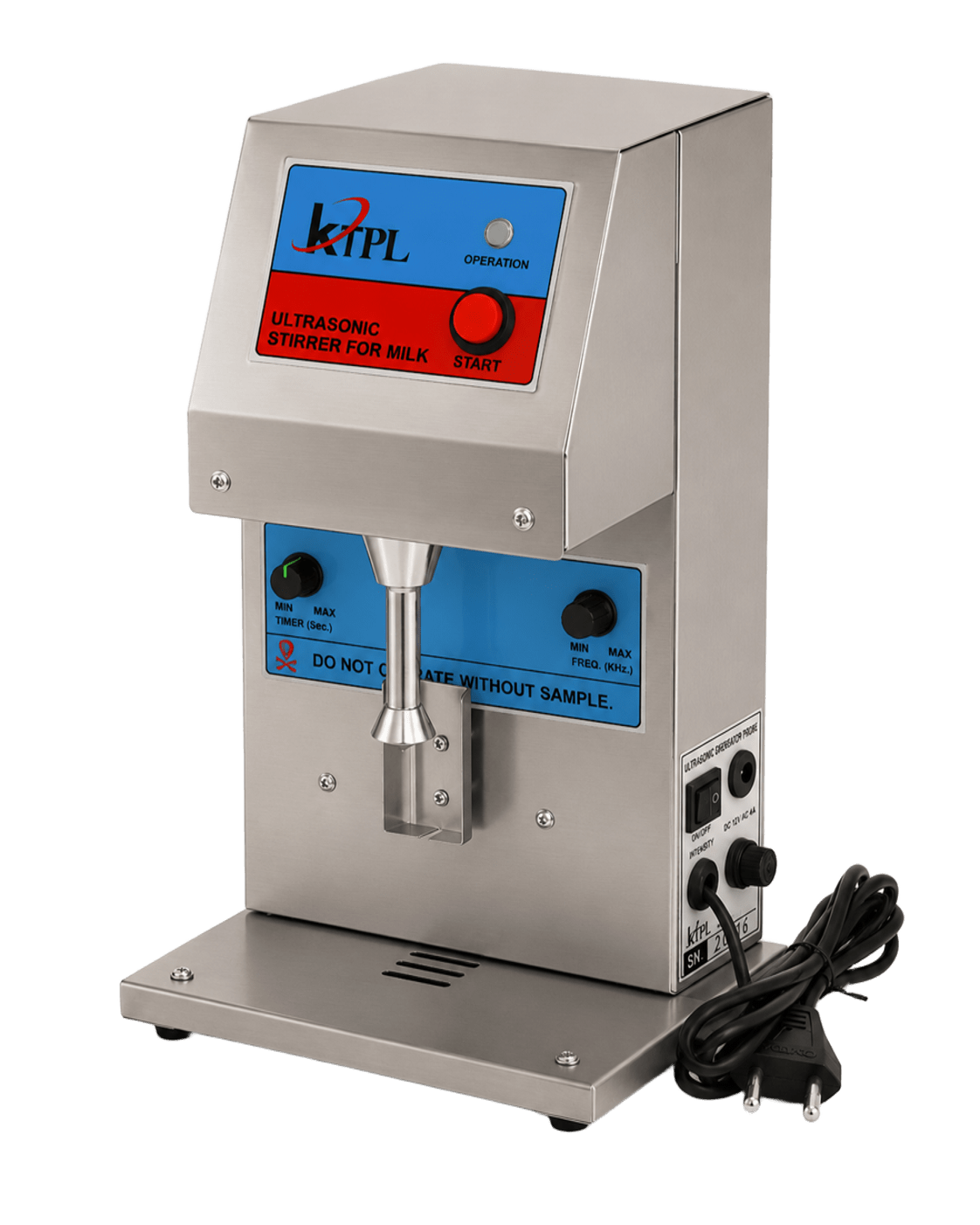
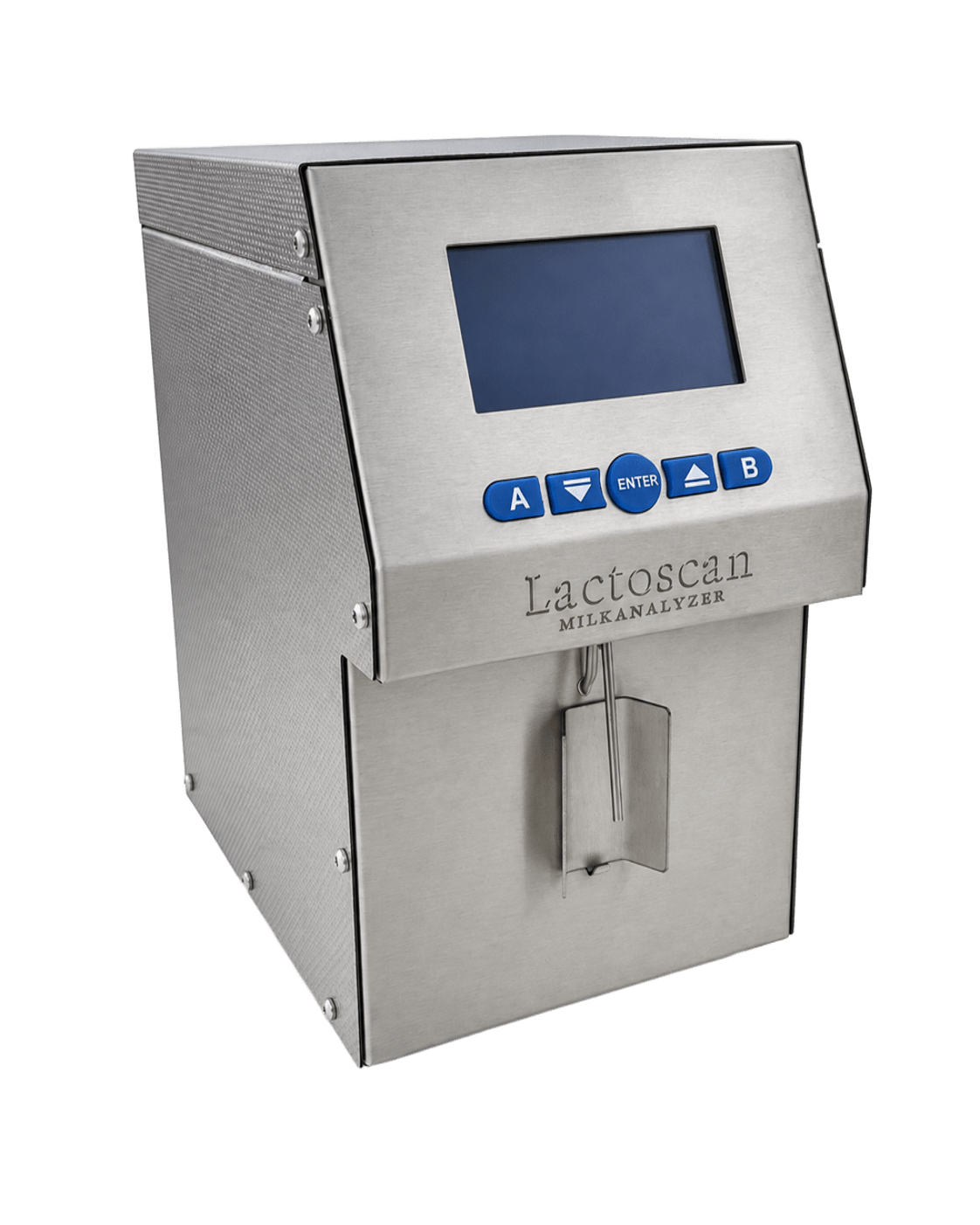
A stainless steel body matters if the analyzer will be used daily in a collection shed rather than a clean lab. Just as important: check the availability of local calibration, spare parts (sensors, PCBs, stirrers) and service support - an analyzer that cannot be serviced quickly becomes a costly line stoppage.
6. Budget vs Total Cost of Ownership
The purchase price is only part of the cost. Factor in calibration frequency, consumables, and how easily spare parts (sensor PCBs, stirrer motors, display modules) are available - a cheaper analyzer with hard-to-find spares can cost more over 3-5 years than a slightly pricier, well-supported one.