

Traditional Wet Chemistry Testing
Methods like the Gerber test have been used in dairy labs for decades and remain accurate reference methods. However, they require trained personnel, glassware, reagents (including sulphuric acid for the Gerber method) and several minutes per sample - impractical for testing hundreds of farmer samples a day at a collection point.
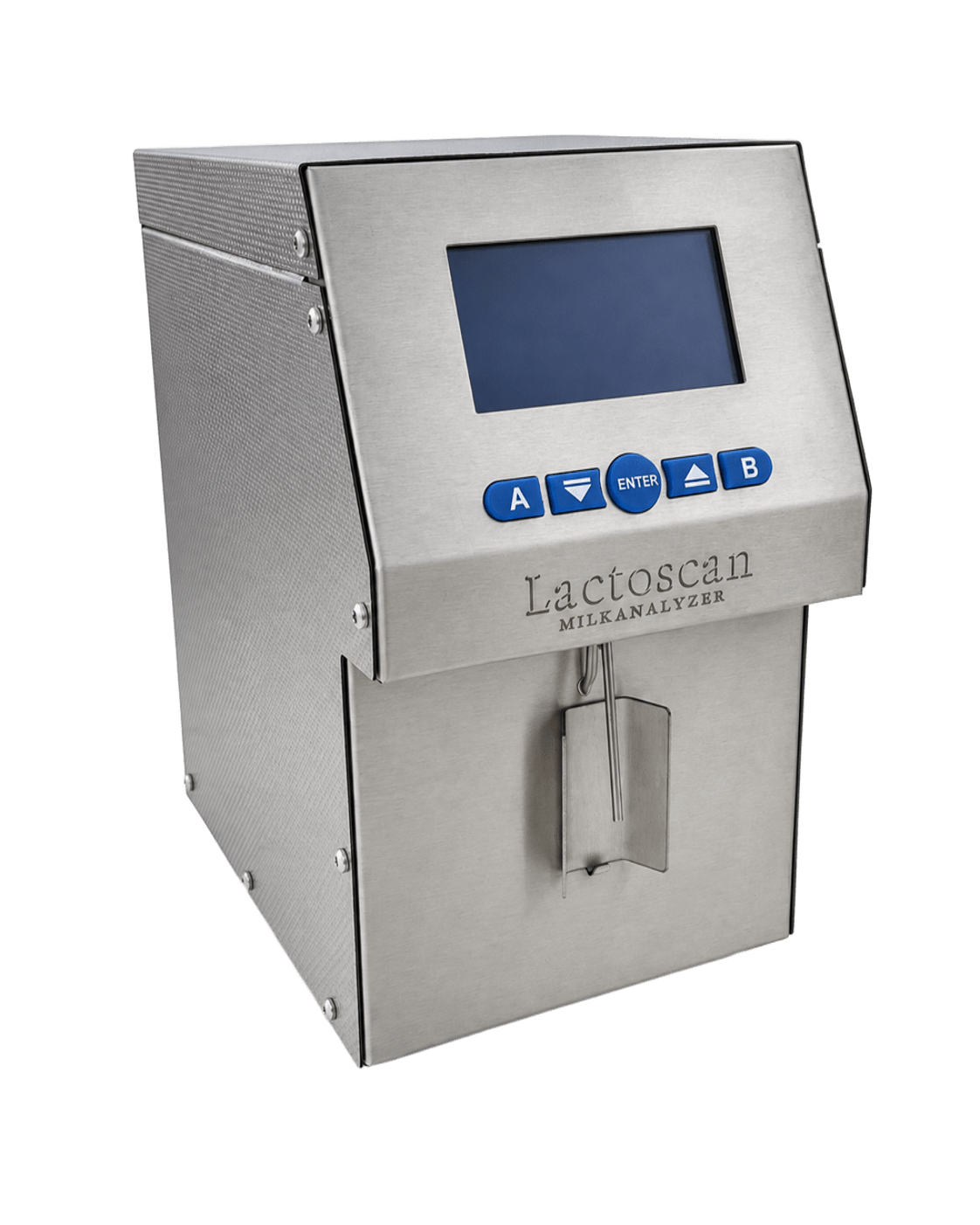
Ultrasonic Milk Analyzers
Ultrasonic analyzers pass sound waves through a small milk sample and use the way the signal changes to estimate FAT, SNF, protein, lactose and more - typically in 10-60 seconds, with no reagents or chemical waste to handle.
Speed and Throughput
This is where the difference is largest: a collection centre testing 300-500 farmer samples a day simply cannot use wet chemistry methods at that pace. Ultrasonic analyzers make same-day, on-the-spot pricing possible.
Cost Per Test Over Time
Wet chemistry testing has an ongoing reagent and glassware cost per sample, plus disposal considerations for chemical waste. Ultrasonic analyzers have a higher upfront cost but a much lower ongoing cost per test, since there are no consumable chemicals involved.
Where Lab Testing Still Matters
Reference labs and quality audits often still rely on certified wet chemistry methods for verification and calibration purposes. Many dairy operations use ultrasonic analyzers for daily collection-point testing and periodic lab testing for calibration checks and dispute resolution - the two methods complement each other rather than fully replacing one another.